Everything You Need to Know Before Hiking to or from the River
Many Grand Canyon rafting trips include a hike along the iconic Bright Angel Trail—either into the canyon to start your journey or out at the end. Advantage Grand Canyon’s experts have done both, and we’ve compiled everything you need to know about this challenging but rewarding hike. From elevation gain and rest stops to water availability and preparation tips, this guide helps you safely navigate one of the most famous trails in the world.
If your Grand Canyon rafting trip covers only the Upper Canyon or Lower Canyon, chances are it includes the legendary Bright Angel Trail—one of the most iconic (and demanding) hikes in the world.
This steep trail connects the South Rim to the Colorado River near Phantom Ranch, dropping or gaining nearly a vertical mile. It’s not a casual stroll—but with realistic expectations, training, and the right gear, it can be one of the most rewarding parts of your rafting adventure.
Distance: ~7.5–9.5 miles (depending on campsite and river access point) Elevation change: ~4,400–4,800 vertical feet Difficulty: Strenuous (per National Park Service) Trail surface: Narrow, steep, uneven, with some steps over 18 inches high Typical time, hiking down (Lower Canyon): 4–6 hours Typical time, hiking up (Upper Canyon): 6–10 hours Pack weight: Usually 20–30 lbs (unless outfitter duffel/mule service is available) Bright Angel Trail Basics – Can…
This hike is absolutely doable for prepared, healthy travelers—but it’s also not optional on Upper and Lower Canyon trips. Treat it with the same respect you’d give the river itself.
Why Rafters Use the Bright Angel Trail
Because there’s no road to the middle of the canyon, outfitters use Bright Angel as the “gateway” for:
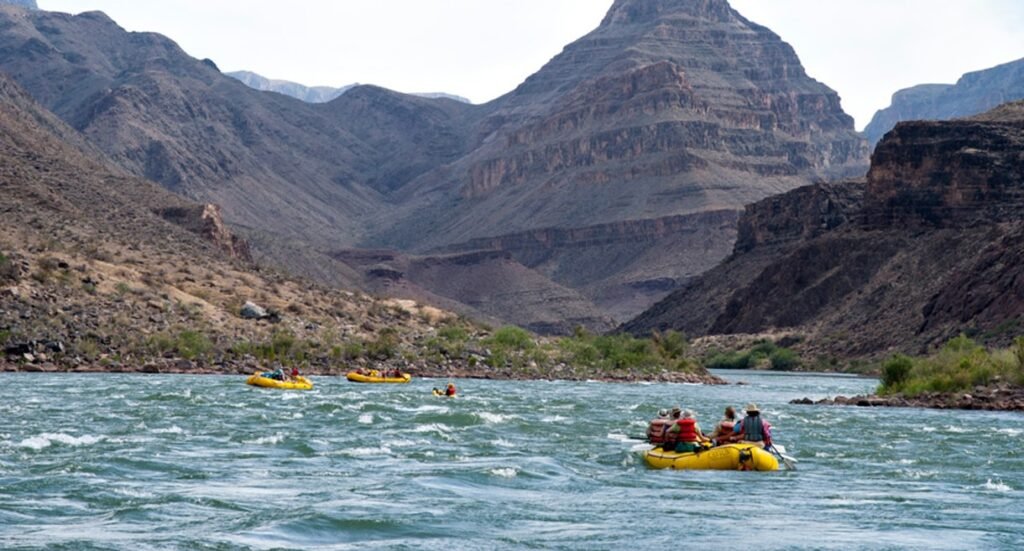
Upper Canyon trips – raft from Lees Ferry to Phantom Ranch, then hike up and out to the South Rim on your final day. Lower Canyon trips – hike down Bright Angel on Day 1 to meet your rafts at the river and continue through the heart of the canyon.
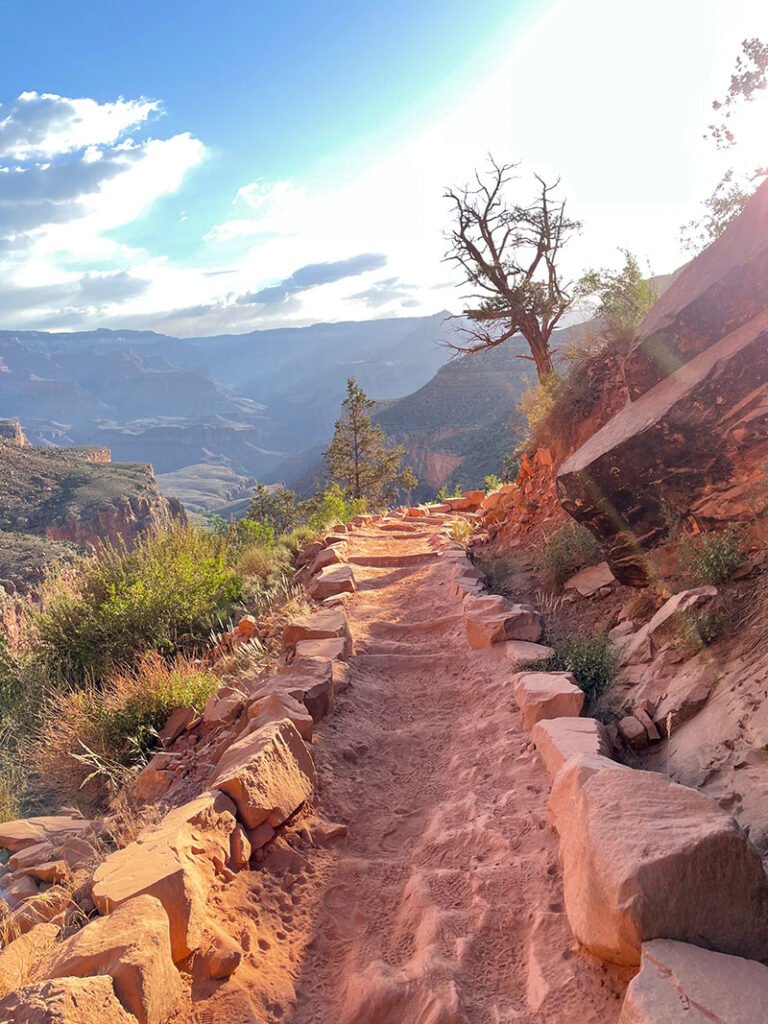
Bright Angel is well-maintained and well-signed, but it’s still true backcountry:
Switchbacks & grades: Long sections of zigzagging trail with sustained steep grades.
Steps: Rock and log steps, some more than 18 inches high, requiring good leg strength and balance.
Surface: Packed dirt, rock, dust, and sometimes ice or mud depending on season.
Exposure: Big views and open drop-offs in places—beautiful, but a consideration for those with vertigo.
Weather:
Spring/fall: Possible ice or snow higher on the trail, cool to cold mornings.
Summer: Temps at the bottom can exceed 100–115°F, with intense sun and very little shade.
You’ll start the hike at river level near Phantom Ranch and climb all the way up to the South Rim.
Stamina & cardio: This route is easier on knees and joints but harder on lungs and heart. You’re climbing nearly a mile straight up. Temperature bonus: As you climb, it usually gets cooler, sometimes by 20°F or more between river and rim. Big advantage: You’re already acclimated to canyon heat and dryness from your rafting trip.
Upper Canyon hikes are ideal for guests with solid cardiovascular fitness who don’t mind a long, steady climb and want that “summit finish” feeling when they top out at the rim.
Lower Canyon: Hike In to Start Your Trip
You’ll begin at the South Rim and descend Bright Angel to the river on Day 1.
Impact on joints: Easier on cardio but much tougher on knees, ankles, hips, and calves due to long, sustained downhill.
Temperature shift: Often cool at the rim in the morning (even 40s–50s°F), then significantly hotter at the bottom—sometimes 100+°F by midday.
Who it suits: Strong legs, good balance, and no major joint issues.
Lower Canyon hikes are best for adventurous travelers comfortable with steep downhill hiking and carrying a pack for hours.
Bright Angel is better equipped than most backcountry trails—but you still need to be self-reliant.
Water
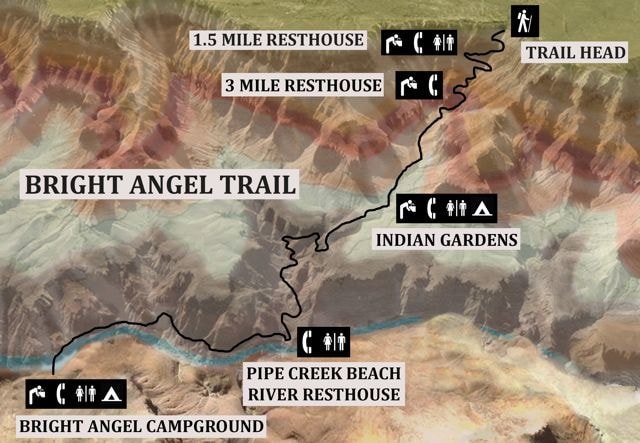
Water spigots at: 1.5-Mile Resthouse, 3-Mile Resthouse, and Indian Garden. Important: Water lines occasionally break or are shut off for maintenance; the Park Service does not guarantee availability. Plan on carrying: At least 3 quarts (3 liters) per person from the start—roughly 6+ lbs of water.
Toilets
Composting toilets at: 1.5 mile, 3 mile, Indian Garden, and River Resthouse.
Pack out all trash and follow Leave No Trace guidelines.
Sun & Shade
Shade can be limited, especially in summer and mid-day hours. Expect intense sun exposure at high elevation with very little cloud cover at times.
Pack Weight, Mule Duffel Service & Gear
How Much You’ll Carry
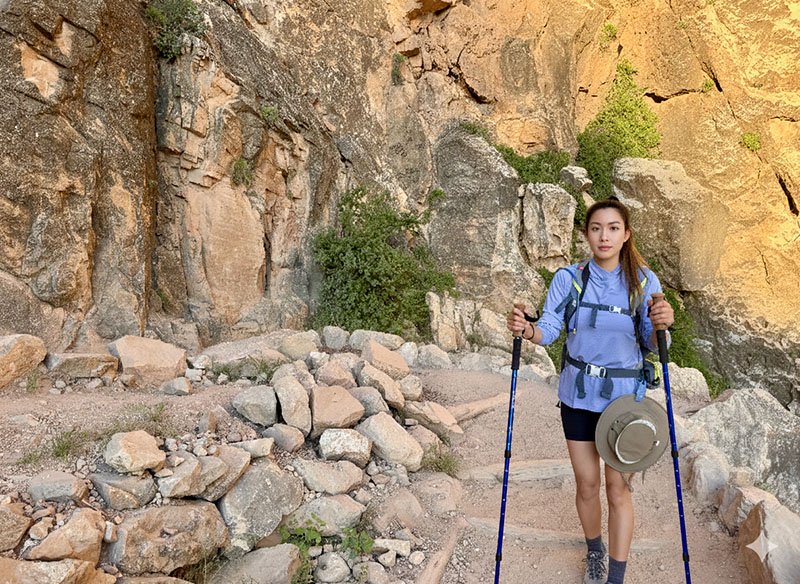
If you follow your outfitter’s packing list, you can expect to carry 20–30 lbs of gear, plus water.
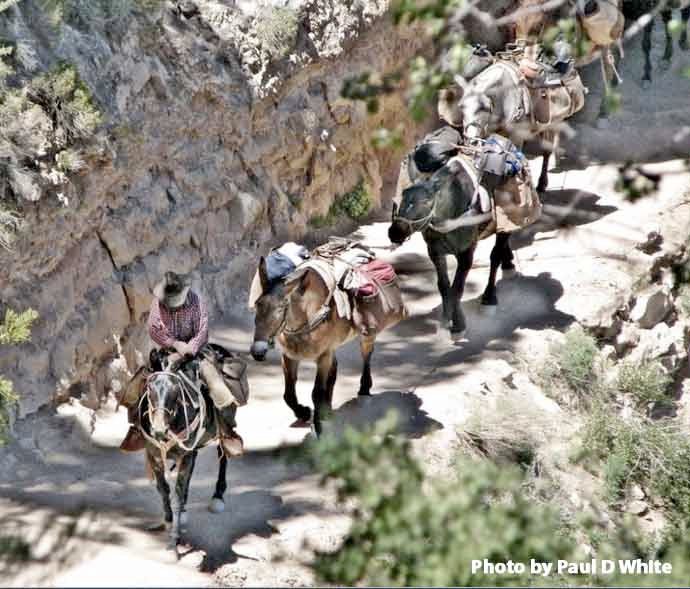
Some outfitters do allow optional mule duffel service for a portion of your gear; others do not. Availability also depends on trip direction and date.
We always recommend you prepare as if you will carry all your own gear—that way you’re pleasantly surprised if mule service is available.
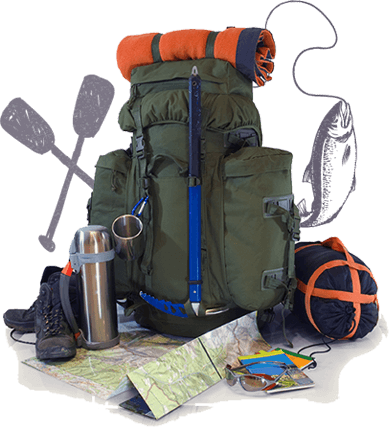
Recommended Hike-Day Gear
Broken-in hiking boots or trail shoes (no brand-new footwear)
Lightweight, moisture-wicking socks + a spare pair
Trekking poles (strongly recommended for both up and down)
3+ liters of water in bottles or a hydration bladder
Electrolyte mix or salty snacks (chips, nuts, etc.)
Sun hat with brim, UV sunglasses, sunscreen, SPF lip balm
Lightweight, breathable clothing (avoid heavy cotton)
Warm layer (fleece or light puffy) in spring/fall
Small first-aid kit, moleskin, and blister care
Bandana or buff to wet and place on your neck to cool down
Training for the Bright Angel Trail
The more fit you are, the more you’ll enjoy both the hike and your Grand Canyon rafting trip overall. Outfitters recommend starting a conditioning program 2–3 months in advance (or more, if possible).
Suggested Training Plan
Aim for 3–5 workouts per week at a vigorous but sustainable pace:
Cardio
Build up to walking or hiking 60+ minutes at a time.
Include hills, stair climbs, or treadmill incline workouts.
Work toward being able to jog or power-walk 2 miles without stopping (if your doctor clears you).
Strength
Focus on: quads, glutes, calves, hips, lower back, and shoulders. Add step-ups, squats, lunges, and core work 2–3 times per week. Practice hiking local trails with a loaded daypack, gradually increasing from 10 lbs up to 20–30 lbs.
Weekend Hikes
If you live near hills or mountains, do longer hikes on weekends.
Think of 500 flights of stairs as roughly equivalent to the elevation change of Bright Angel.
Heat, Hydration & Safety
Two of the top medical issues in Grand Canyon are dehydration and hyponatremia (too little sodium in the body).
Hydration & Electrolytes
Start hydrating the day before your hike—6–8 glasses of water.
On the trail, sip constantly, don’t chug once an hour.
Pair water with salty snacks or electrolyte drinks to keep sodium levels balanced.
Heat & Weather
Expect very hot conditions at the river in summer (100–115°F).
In spring and fall, icy or snowy patches near the top are possible—especially early or late season.
Take regular breaks in any available shade. Wet your hat, shirt, or bandana to cool your core temperature.
If you have a history of asthma, heart disease, high blood pressure, or heat-related illness, talk with your doctor before booking a trip that requires this hike.
If you book an Upper Canyon or Lower Canyon rafting itinerary, yes—the hike is part of your route. If you prefer not to hike, we’ll point you toward itineraries that stay entirely on the river or use helicopter access.
For prepared, reasonably fit travelers, Bright Angel is safe and spectacular. The biggest risks usually come from heat, dehydration, or overexertion—exactly why we emphasize training, hydration, and pacing.
Some outfitters can arrange mule duffel service, but not all—and it’s never guaranteed. Plan as though you’ll carry your own pack, then treat mule service as a bonus if it’s available on your specific trip.
Rangers and guides take safety seriously, and evacuations are a last resort reserved for true emergencies. It’s crucial to be honest about your health and training before your trip.
You don’t have to figure this out alone.
Need Help Deciding?
We’ve helped thousands of guests choose between Upper, Lower, Full, and Western Canyon trips based on their fitness level, medical history, comfort with hiking, and time frame.
Want a Grand Canyon rafting trip without a big hike?
Wondering if Bright Angel is realistic for you or someone in your group?
Need help understanding which outfitters offer which options?