Grand Canyon Raft Types
Grand Canyon Raft Types | Compare Motor, Oar, Paddle, Hybrid & Dory Trips
Grand Canyon Rafting TRIPS
Speed, Comfort & Adventure Levels Explained by Experts
Your raft choice defines your adventure. At Advantage Grand Canyon, we’ve helped thousands of travelers choose between motorized speed and human-powered serenity.
This page compares all five Grand Canyon raft types—motor, oar, paddle, hybrid, and dory—so you can understand the differences in comfort, pace, and group style. Whether you want a smooth, social ride or hands-on whitewater action, here’s everything you need to know to pick the perfect rafting style for your trip.

ADVANTAGE GRAND CANYON
Quick Reference Table
Motorized J-Rig
Seats / Raft
14 – 18
Daily Miles¹
26–32
Trip Length (Full Canyon)
6–8 days
Best For
Riding “finger-like” pontoons like a bull
Vibe
Social, roller-coaster waves
Motorized S-Rig
Seats / Raft
14 – 18
Daily Miles¹
25–32
Trip Length (Full Canyon)
6–8 days
Best For
“Bath Tub” seating, back support
Vibe
Thrilling, more legroom
Motorized C-Rig
Seats / Raft
16 – 20
Daily Miles¹
30
Trip Length (Full Canyon)
6–9 days
Best For
Front-facing rapids, tight groups
Vibe
Fast, intimate group
Oar Raft (18')
Seats / Raft
4 – 6
Daily Miles¹
8–15
Trip Length (Full Canyon)
12–15 days
Best For
Photographers, hikers
Vibe
Quiet, relaxed pace
Paddle Raft (15')
Seats / Raft
6–8 + guide
Daily Miles¹
8–13
Trip Length (Full Canyon)
12–15 days*
Best For
Active, fit crews
Vibe
Hands-on teamwork
Hybrid Trip
Seats / Raft
Oar + Paddle mix
Daily Miles¹
8–15
Trip Length (Full Canyon)
12–15 days
Best For
Mixed-ability groups
Vibe
Rotate boats daily
Dory (17')
Seats / Raft
4
Daily Miles¹
8–15
Trip Length (Full Canyon)
12–15 days
Best For
River classicists
Vibe
Surfing feel, wood craft
Motorized Rafts
J-Rig vs. S-Rig vs. C-Rig
J-Rig (37′ twin-pontoon)
Seats:
Center bench + front “bull” seats on finger-like pontoons
Pros:
Fastest canyon coverage, large capacity, stable
Cons:
Slight engine noise (quiet 4-stroke), less intimate
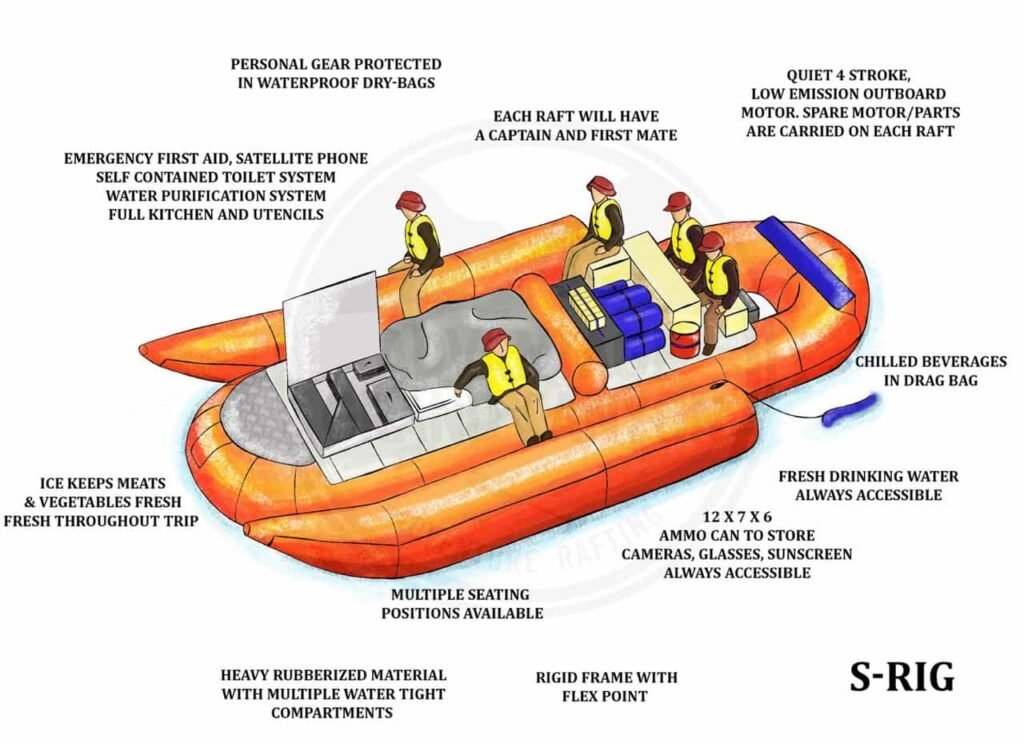
S-Rig (33′ pontoon)
Pros
Most popular and most comfortable motor option; back-supported seating; more legroom; easier gear access
Cons:
Engine noise, slightly less social
C-Rig (38′ pontoon)
Pros
Intimate group size; front seats hit rapids hardest; ideal for those who want a tighter bond with crew
Cons:
Fewer launch dates available; larger raft can feel heavier
Oar, Paddle & Hybrid:
When Human-Powered Rafts Are Best
Sit back and soak in the grandeur while your guide row
Perfect for photographers, side-canyon hikers, and those wanting quiet reflection
Everyone paddles as a team—ideal for active, fit travelers who want a fully immersive adventure
Expect adrenaline, teamwork, and plenty of splashes
The “classic” Grand Canyon vessel—wooden-hulled with a surfing feel through rapids
Elegant, rare, and limited inventory—book early
Rotate between paddle and oar rafts daily
A great option for mixed-fitness groups or those wanting variety
Motor Rafting Adventure
Pros & Cons Snapshot
| Raft Type | Biggest Pro | Potential Con | |||
|---|---|---|---|---|---|
|
Motor (J/S/C) |
See entire canyon in one week, lots of action each day |
Larger group on raft |
|||
|
Oar |
Quiet, hike-heavy days |
Requires longer vacation |
|||
|
Paddle |
Active thrill every rapid |
Physical effort; need to stay attentive |
|||
|
Hybrid |
Choice on daily activity level |
Very limited in inventory |
|||
|
Dory |
Classic river heritage feel |
Few seats; high demand |
How to Choose the Right Raft for Your Group
Ask yourself two key questions:
- How many vacation days can you spare?
6–9 days: Motor trip
12–15 days: Oar, Paddle, or Hybrid
- How much do you want to paddle vs. ride?
Want to relax? Choose Motor or Oar
Want action? Choose Paddle or Hybrid
Grand Canyon Trips
Still Unsure Which Raft Fits Your Style?
Frequently Asked Questions
Here are some major questions related to Grand Canyon Rafting Trips asked by customers.
No — you’ll see the same iconic canyon sections, just at a faster pace.
Yes. Motor trips are often less expensive per day due to shorter durations.
Most outfitters require paddlers to be age 12+ and strong swimmers.